The people
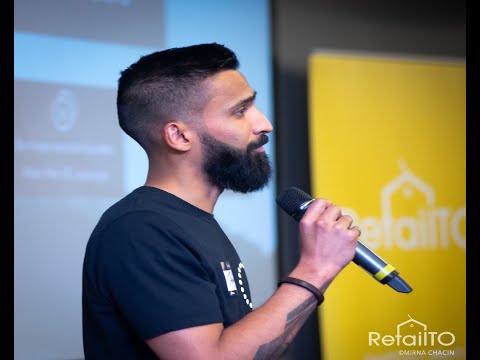
What they build
Open roles via the TechTO Job Board
Working at Clearco
Browse open roles across the community on the TechTO Job Board — Canada’s most connected tech network. Clearco’s roles show up here whenever they post.
Open roles on the TechTO Job Board ↗Or their own careers page: clear.co/careers ↗Jobs live on jobs.techto.org — the only structured source. We link to it rather than scraping career sites, so the board is always the source of truth.
On the TechTO stage
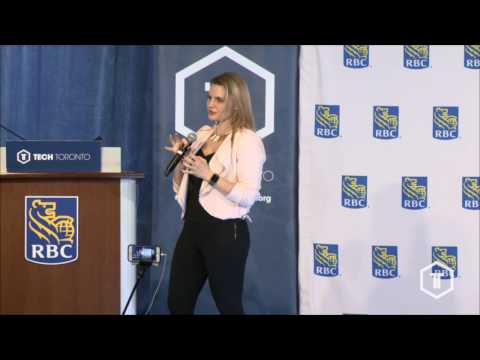
How the Future of Work is Changing
Watch on YouTube ↗
FintechTO Fireside Chat with Andrew D'Souza, Co-Founder & CEO of Clearbanc
Watch on YouTube ↗
Michele Romanow and Andrew D'Souza on Culture and Working From Home
Watch on YouTube ↗
A Conversation with Michele Romanow
Watch on YouTube ↗
Going all in on Entrepreneurship with a Canadian Tech Titan
Watch on YouTube ↗Democratizing access to capital | Tanay Delima, Co-Founder and VP Product at Clearbanc
Watch on YouTube ↗Every talk is searchable — ask the archive about Clearco ↗
About
Clearco (founded as Clearbanc in 2015) built revenue-based financing for online businesses from Toronto. Instead of pitching for equity, e-commerce merchants connect the data that runs their business — payment processors, ad accounts, banking — and get a funding offer in about a day, repaid as a share of revenue plus a flat fee, with no personal guarantees and no dilution. The idea started small: advancing Uber drivers $10–20 of their earnings, then funding Airbnb hosts, before the company went all in on e-commerce and grew to fund merchants across 11 countries. By mid-2021 Clearco had raised a US$215M round led by SoftBank Vision Fund 2 at a valuation near US$2B. The 2022 e-commerce and rate shock hit hard: layoffs, market exits, and two CEO handoffs — co-founder Andrew D'Souza to co-founder Michele Romanow in 2022, then to capital-markets veteran Andrew Curtis in January 2023 — followed by an October 2023 recapitalization (US$60M Series D led by Inovia Capital and Founders Circle Capital, plus an asset-backed facility from Pollen Street Capital). The reset held: capital advances tripled in 2024, and a rebuilt funding platform launched in 2025. Both co-founders have since moved to new ventures — Romanow remains a Dragon on CBC's Dragons' Den, and D'Souza founded Boardy in 2024 — while Curtis runs Clearco day to day. Over its first decade the company has put more than US$3B into 10,000+ businesses.
Backers
SoftBank Vision Fund 2 (led the US$215M Series C, July 2021, at a valuation near US$2B), Inovia Capital and Founders Circle Capital (co-led the US$60M Series D recapitalization, October 2023), Pollen Street Capital (asset-backed facility with up to US$100M capacity, 2023); earlier rounds included Emergence Capital and Highland Capital Partners (assumption).
More from TechTO ×6
Quick answers
What does Clearco actually do?
It funds e-commerce businesses with revenue-based capital: merchants connect their sales, ad, and banking data, get an offer in about a day, and repay from a share of revenue plus a flat fee — no equity, no personal guarantees. Current products include Cash Advance, Rolling and Fixed Funding Capacity, and Invoice Funding.
Are the founders still running Clearco?
No. Andrew Curtis, a capital-markets veteran from Merrill Lynch and Lazard, has been CEO since January 2023. Co-founder Michele Romanow stepped back after serving as CEO through 2022 (she's still a Dragon on CBC's Dragons' Den), and co-founder Andrew D'Souza went on to start Boardy, an AI that makes warm intros, in 2024.
How did a two-billion-dollar fintech start with $20 advances?
Clearbanc's first product fronted Uber drivers $10–20 of their earnings. That data-first underwriting scaled to Airbnb hosts, then to e-commerce merchants in 11 countries. After the 2022 downturn forced layoffs and a 2023 recapitalization, the company returned to growth — capital advances tripled in 2024.