The people
What they build
Open roles via the TechTO Job Board
Working at Maple
Browse open roles across the community on the TechTO Job Board — Canada’s most connected tech network. Maple’s roles show up here whenever they post.
Open roles on the TechTO Job Board ↗Or their own careers page: getmaple.ca/careers ↗Jobs live on jobs.techto.org — the only structured source. We link to it rather than scraping career sites, so the board is always the source of truth.
On the TechTO stage

Brett Belchetz of Maple presents How Virtual Care is Transforming Healthcare Delivery
Watch on YouTube ↗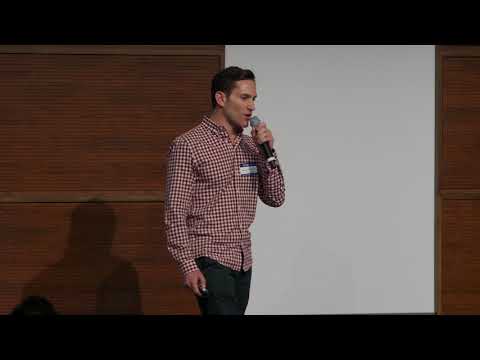
Brett Belchetz of Maple Corporation presents Trying to innovate Canadian Healthcare
Watch on YouTube ↗
The Journey to Becoming a Leader in the Healthcare Space | A Candid Conversation with Brett Belchetz
Watch on YouTube ↗
The Founders Journey ft. Dr. Brett Belchetz of Maple
Listen to the episode ↗Every talk is searchable — ask the archive about Maple ↗
About
Maple started in 2015 in Brett Belchetz's dining room. He was an emergency room doctor watching patients wait eight hours for four minutes of transactional care, and he brought in two friends — Stuart Starr as CTO and Roxana Zaman for the product and business side — because he had no technology or company-building background himself. The first doctors on the platform were his own ER colleagues, brought on as co-owners so the network would stay staffed in the early days when there were no patients. By the April 2018 TechTO talk Maple had over 150 practitioners available around the clock, coast to coast, resolving 91% of visits on the platform. Because Canadian provinces largely do not fund virtual care, Maple is paid for by patients directly, by employers through benefit plans, and by provincial governments under contracts Belchetz said in 2018 he was not permitted to talk about. That funding model has drawn steady public criticism, which he answers with a taxi analogy: you pay to save the hours, not because walking isn't free. Shoppers Drug Mart invested $75M CAD in late 2020 alongside a deal to provide virtual care. Maple explored a $100M TSX IPO in 2021 and did not file. In November 2025 it acquired Beyond ADHD.
Backers
Shoppers Drug Mart, a subsidiary of Loblaw Companies Limited, invested $75M CAD in late 2020 alongside a deal to provide virtual care services. Maple hired TD Securities, RBC Capital Markets and CIBC World Markets toward an expected $100M TSX IPO in 2021 but never filed.
More from TechTO ×6
Quick answers
What does Maple do?
Maple connects Canadians to a doctor virtually — by phone, video or text — usually in under ten minutes, with digital prescriptions and delivery. It goes straight to a doctor rather than routing through a nurse or care coordinator, and keeps shared online records so care stays continuous even when you see a different doctor each time.
Who founded Maple, and when?
Brett Belchetz, an emergency room physician and former McKinsey consultant, founded Maple in 2015 with two friends: Stuart Starr, his CTO, and Roxana Zaman. They worked out of Belchetz's dining room with no funding, and the first doctors on the platform were his own ER colleagues, brought on as co-owners.
Does Maple cost money, and why?
Yes, because Canadian provinces largely do not fund virtual care. Maple is paid for by patients directly, by employers through benefit plans, and by provincial governments under contract. Belchetz's argument on the TechTO stage is that it should be publicly funded, and the way to get there is to run it and prove it works — his 2018 talk was largely about the abuse the company takes for charging.